Stop Letting Your Agent Work Alone: After Teaming Up Hermes and DSH, My Efficiency Went Up 10x
Early software engineering textbooks teach us that pair programming tends to produce better designs and better code than a programmer working alone. In pair programming, the person typing is the driver; the one reviewing is the navigator.

The same pattern shows up in rally racing: every car carries a driver and a co-driver, working together off the pace notes to navigate complex stages.

Pair programming and rally racing share one idea: one role focuses on immediate execution while the other keeps watching the bigger picture, anticipating what's next and correcting course early. Both share the same situation and stay in constant sync, which lowers cognitive load and the cost of mistakes on complex tasks.
Following that logic: when a Hermes Agent and DeepSeek Harness share context inside the same LightVela task environment, dividing the work and handing off control, two agents can form exactly this kind of duo.
LightVela now supports running Hermes Agent and DeepSeek Harness (DSH for short) side by side in the same cloud environment, and we've been exploring this collaboration pattern ourselves:
Hermes Agent's clear strength is continuously understanding a person and a project. It retains your preferences and project knowledge, distills working methods into Skills, and keeps receiving tasks from your chat channels. That makes it the natural navigator.
DSH's clear strength is owning a concrete workspace, reading and modifying files, running tests, and handling errors. That makes it the natural driver.
How to Set It Up: Preparation
Full disclosure first: making this collaboration work requires installing a Skill and a tool. It's an exploratory setup for AI-era adventurers who enjoy tinkering. A polished, productized version is still being designed.
If you're still reading, you probably want to try it. One honest warning: AI is probabilistic, so even if you follow every step, there's a chance it won't work on the first try. When that happens, get good at letting your AI help you fix it. You're part of the collaboration too.
First, create your own agent in LightVela. The barrier is low: the China site supports WeChat, QQ, and phone login, the international site supports Google and GitHub, and there's a free trial so you can start painlessly.
Our personal recommendation: go straight for the 4,500-credit plan. It's been tested and it lasts.
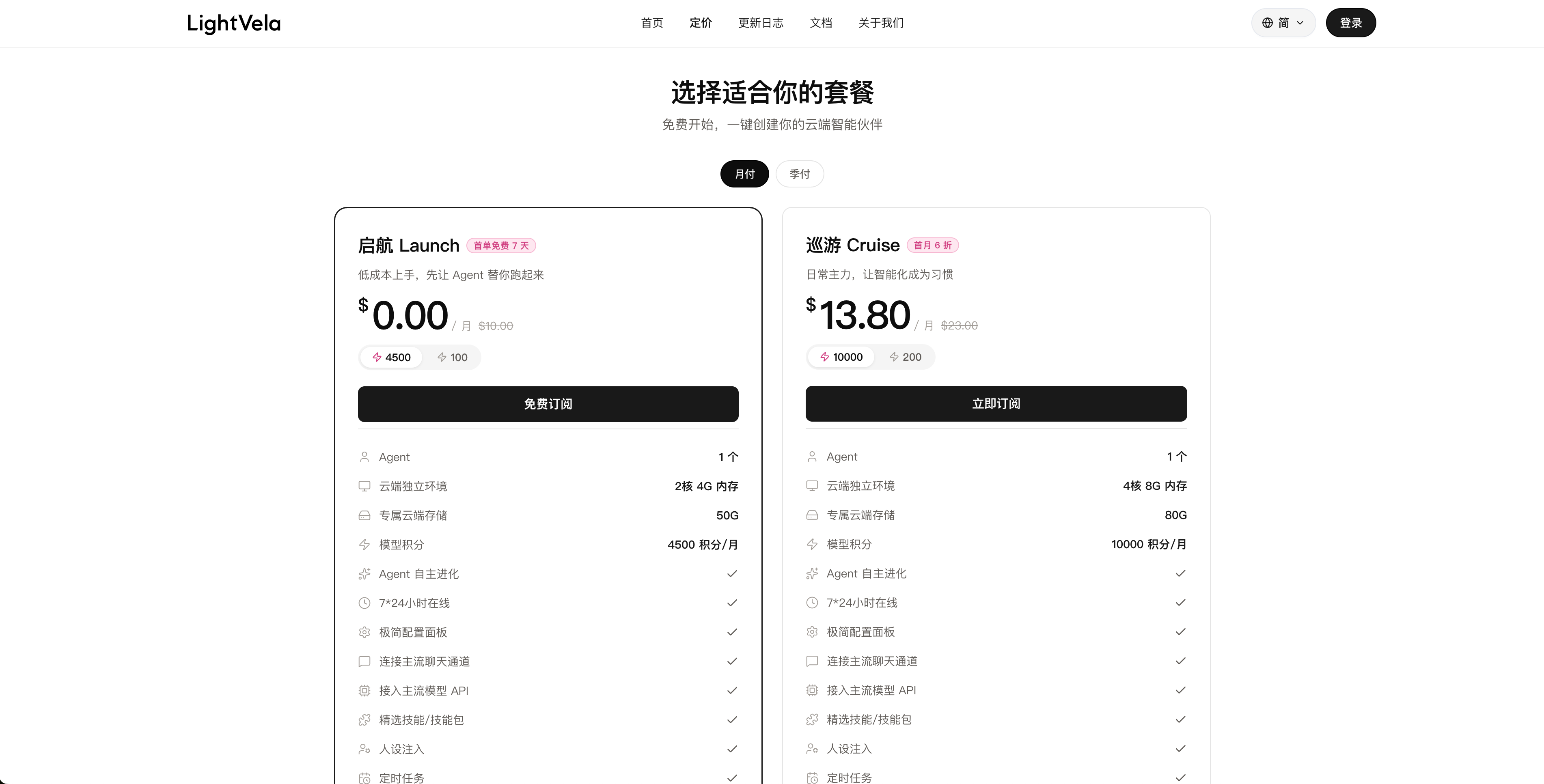
After subscribing, head to the Explore page, where you'll find the DeepSeek Harness entry. Open it and install.
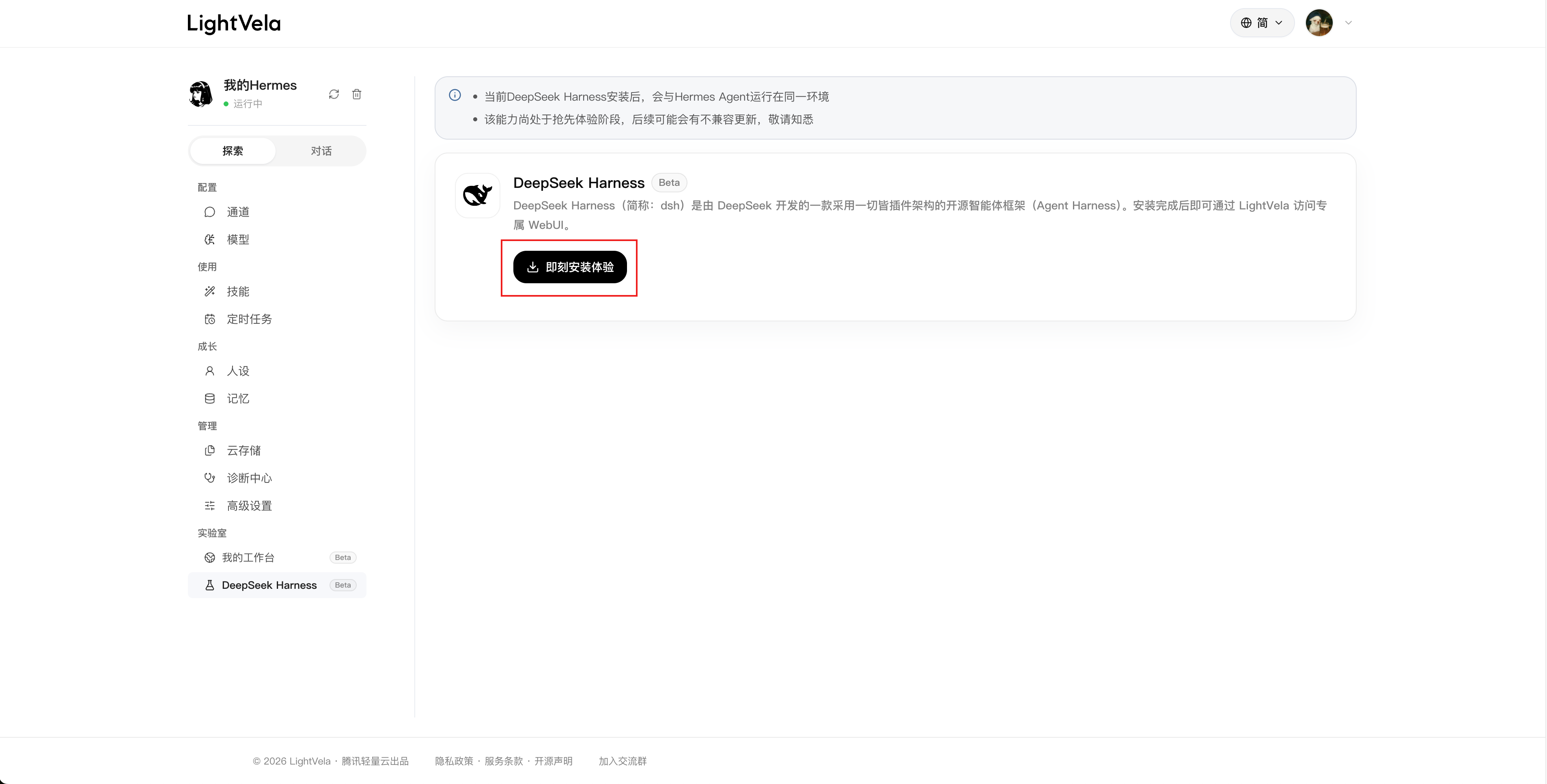
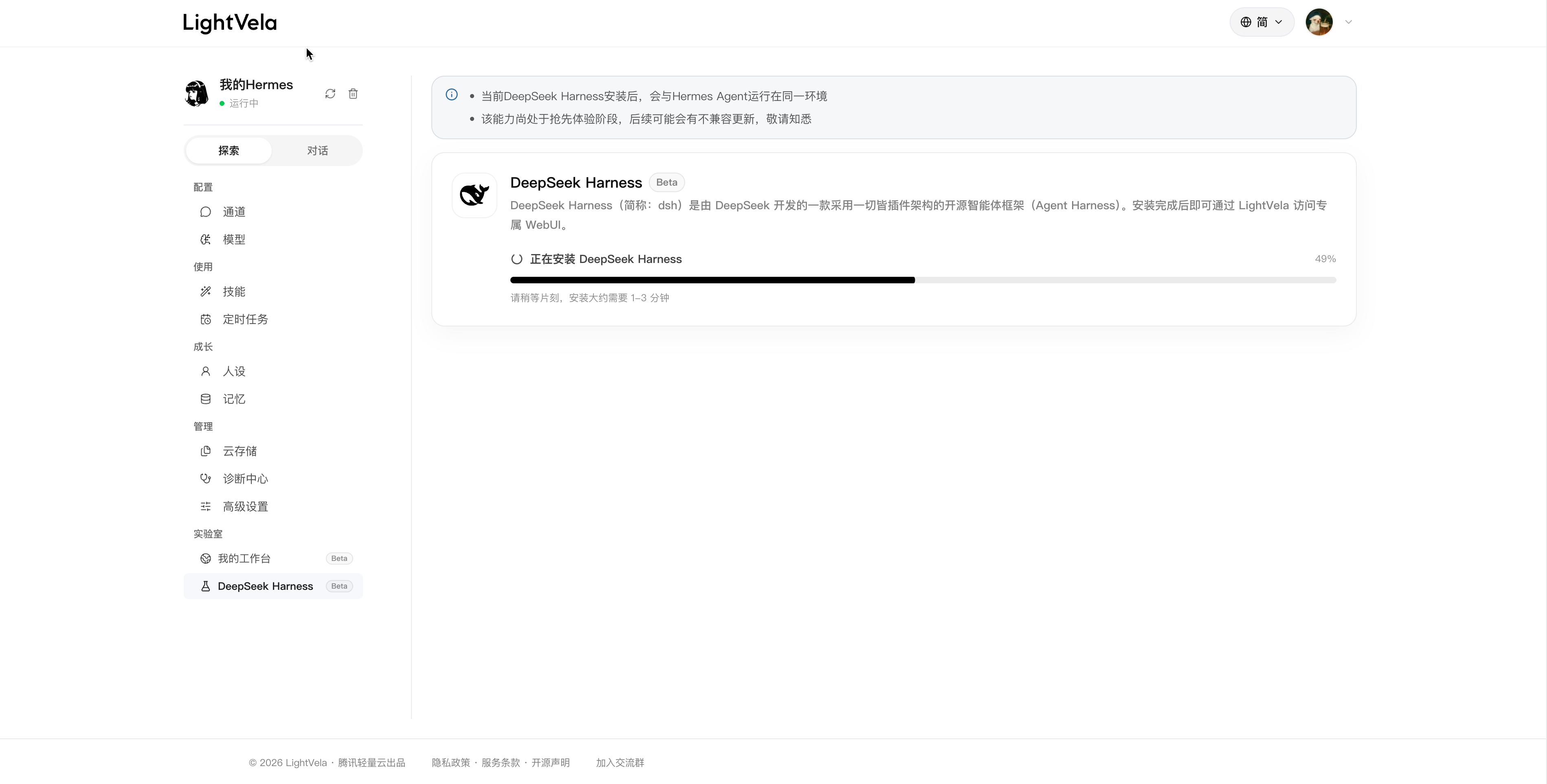
Installation takes about 1-3 minutes. In our testing it was closer to one. Once installed, you can configure DSH's model and access its WebUI from the same page.
Editor's note: this part of the experience isn't good enough yet. DSH needs its own model configuration, and we haven't found an elegant way to sync model settings between the two agents. It's on the fix list.
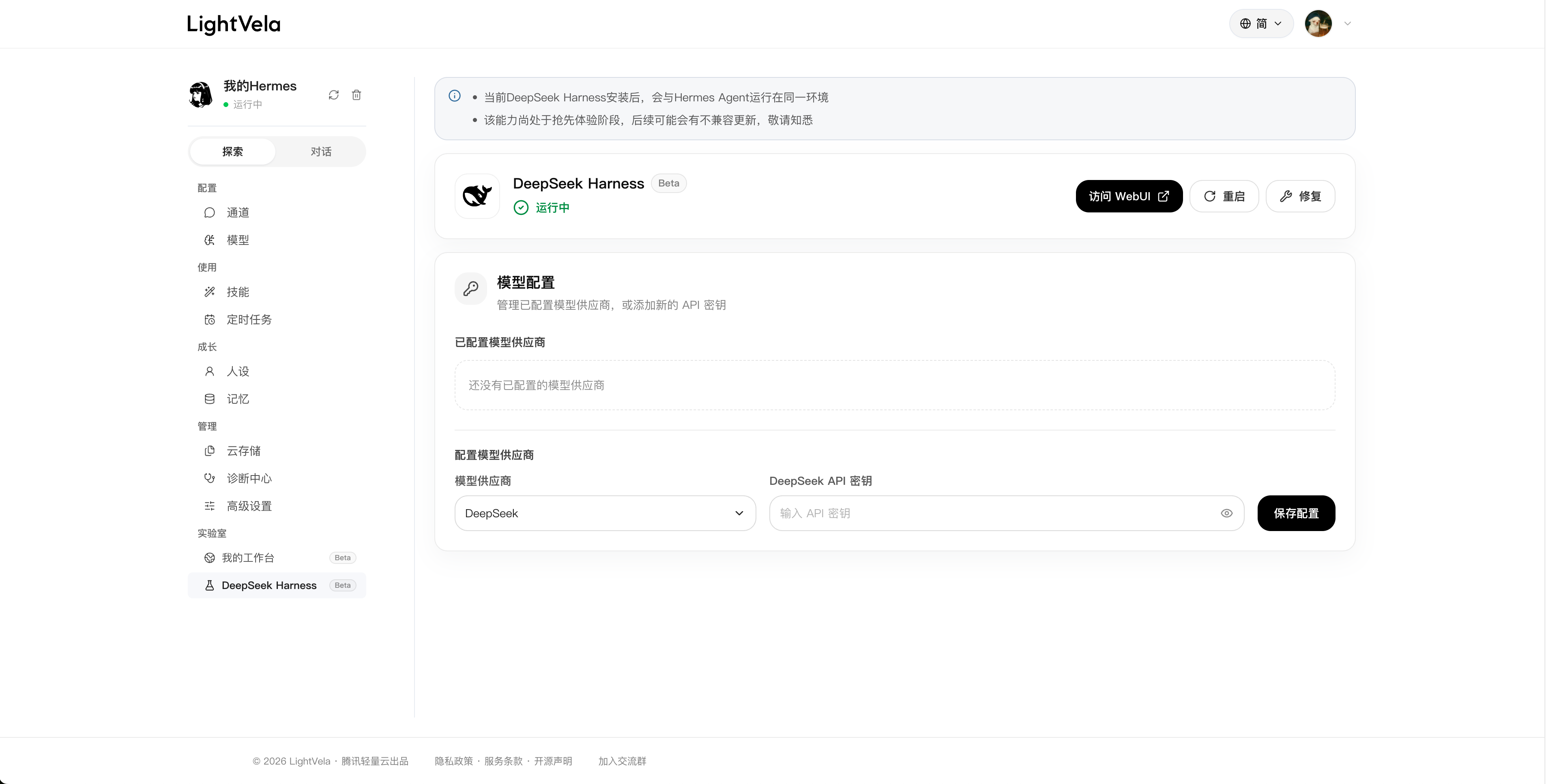
We went with DeepSeek's official model, the new DeepSeek V4.1 Flash, natively multimodal and reasonably priced. Steps are straightforward, so we'll just leave the link: DeepSeek API Platform.
If you want more models, you can also configure them in the WebUI, equally simply.
On WebUI access: no need to worry about someone else getting your URL. Every user gets a dedicated domain with an authentication layer on top, so only you can use yours.
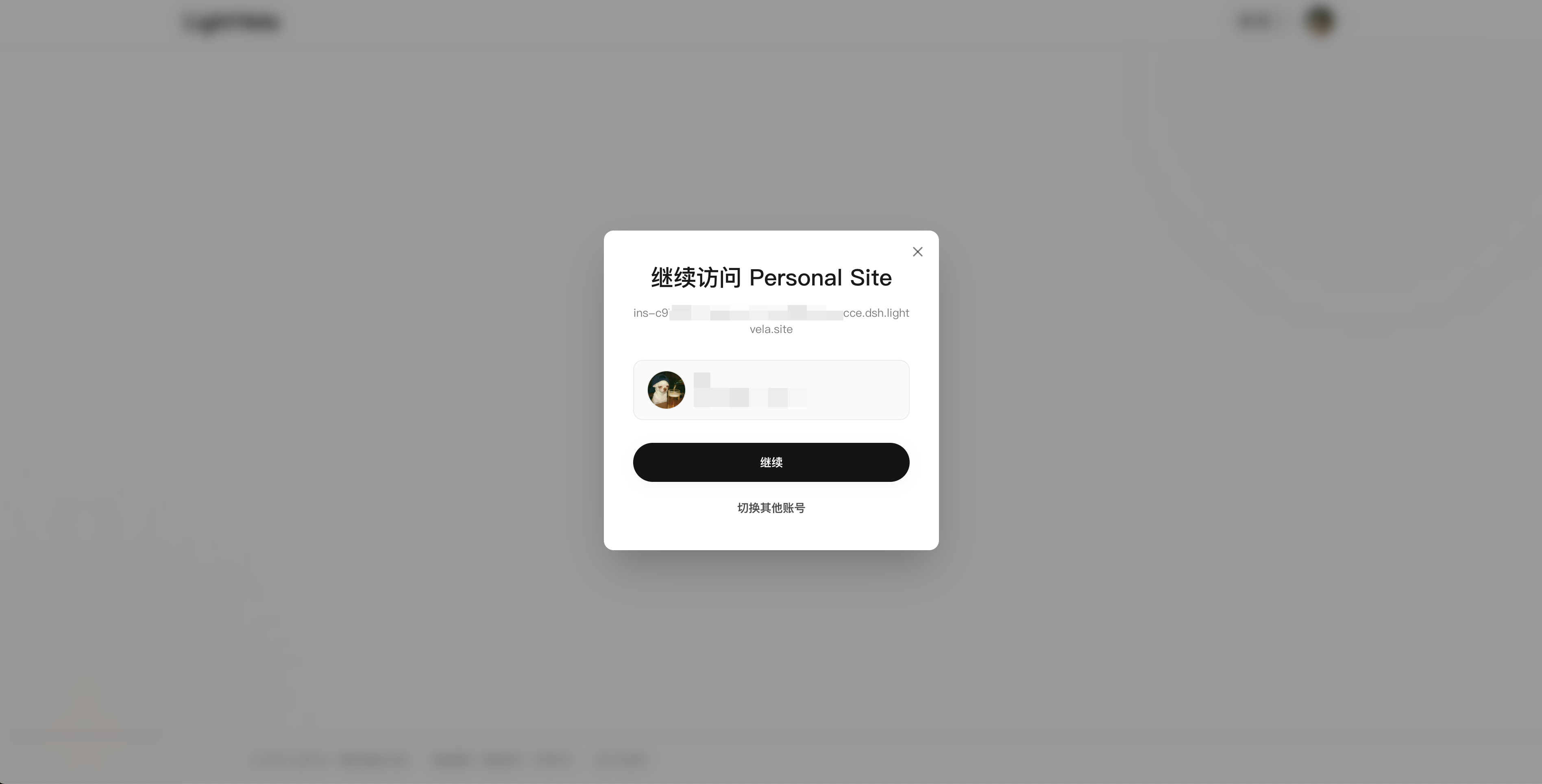
How to Set It Up: The Key Step
In short, this step installs a Skill. The installation does two things: registers DSH as a tool of your Hermes Agent, and teaches the Hermes Agent how to call it.
This approach is just one of several designs we're exploring on top of Hermes Agent's existing mechanisms. The Skill and tool were vibe-coded on our side. If you hit usability issues or have better ideas, join the LightVela community group and let's discuss.
Copy the following line and send it to your Hermes Agent in LightVela to initialize everything:
given https://skillhub.cn/install/skillhub.md, install @user_70854421/dsh-pilotIf you haven't set up a chat channel yet, you can send it directly on the Chat page:
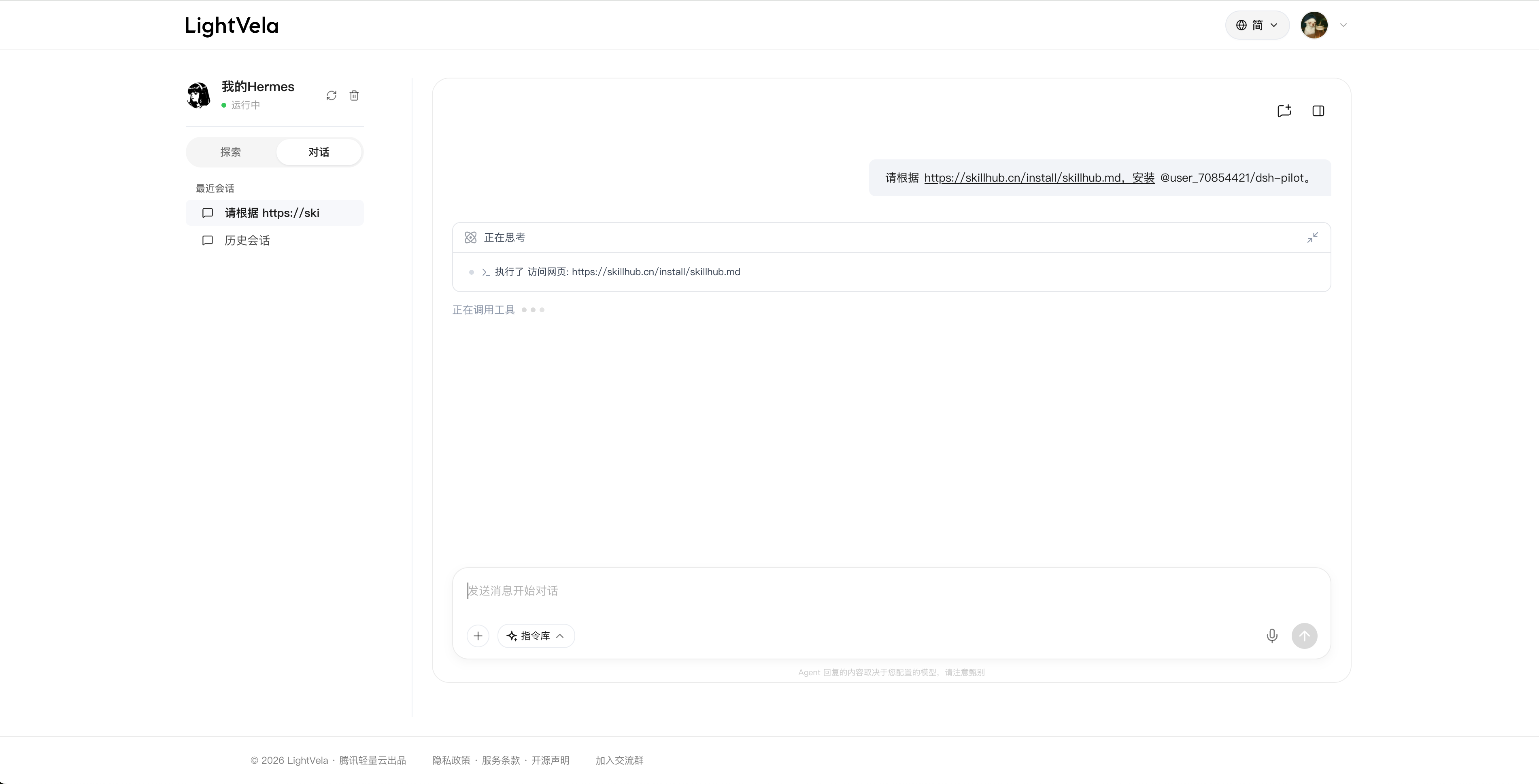
Once installed, it looks roughly like this. The agent will usually check DSH's status; just confirm when it asks:
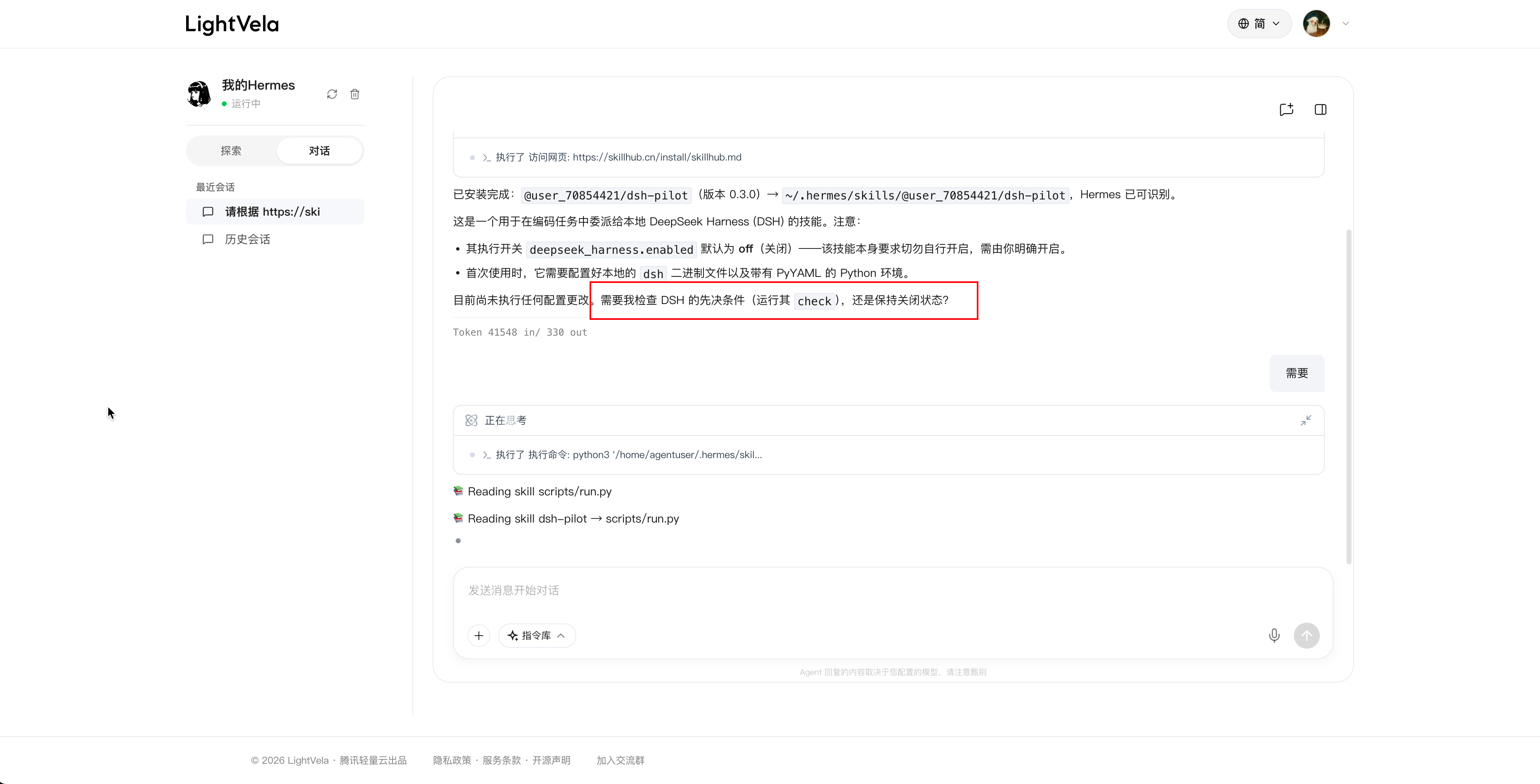
After registration, one more step: have the Hermes Agent enable the newly registered tool.
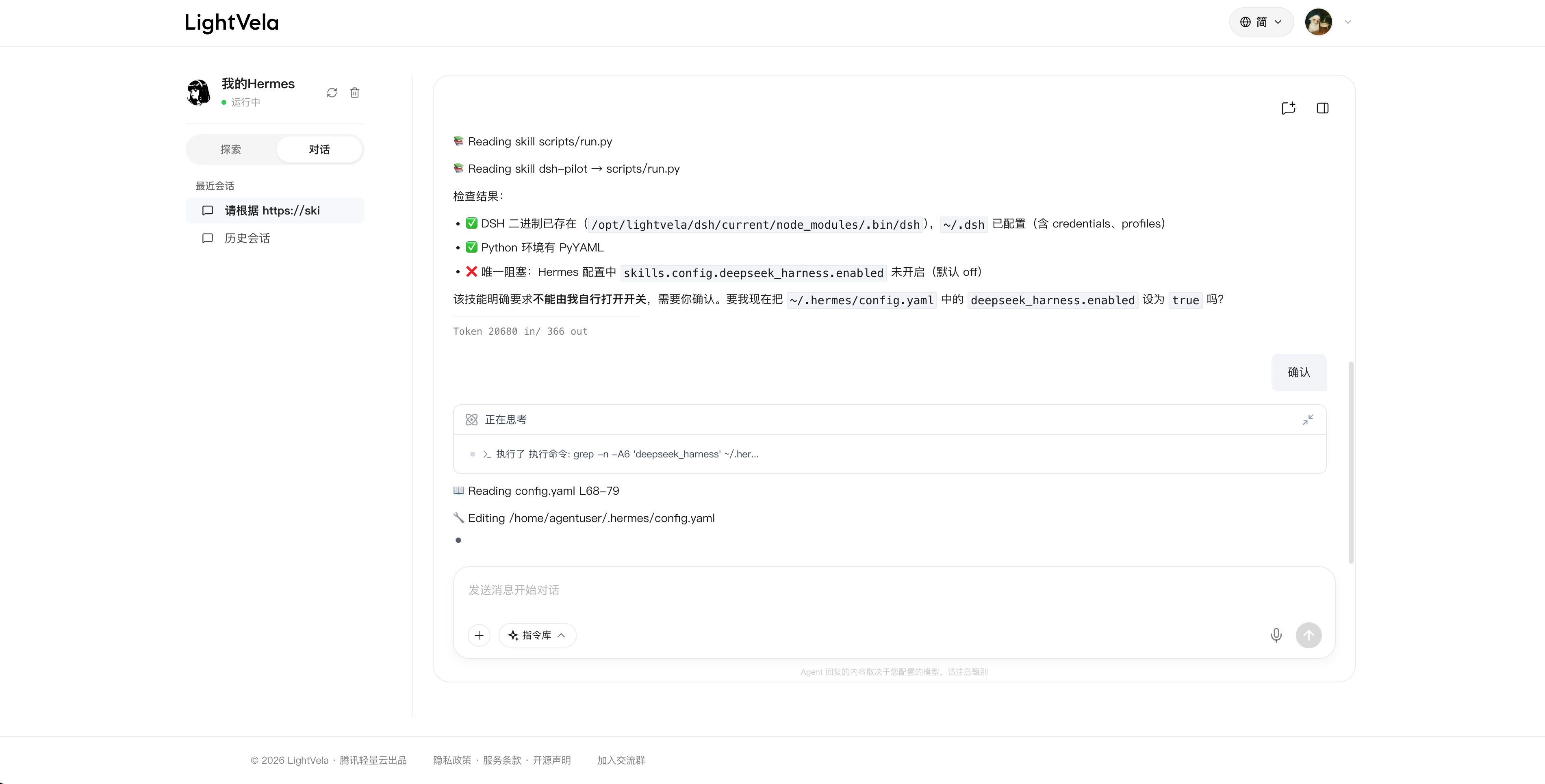
The agent will confirm when it's on:

How to Use It: Each Playing to Its Strengths
Our suggestion: pair this with the Workbench in LightVela. Workbench provides static site hosting, so agent-generated projects can be deployed straight to the cloud. Backend service deployment is on the way.
Here's a minimal demo. Copy and send this to your Hermes Agent:
Using the newly installed skill, help me create a simple static blog page. You will design the plan, DeepSeek Harness will write the code, and then you will review it.

Once implementation is complete, use the `website-builder` skill to deploy it.
When things go normally, the two of them collaborating looks like this:
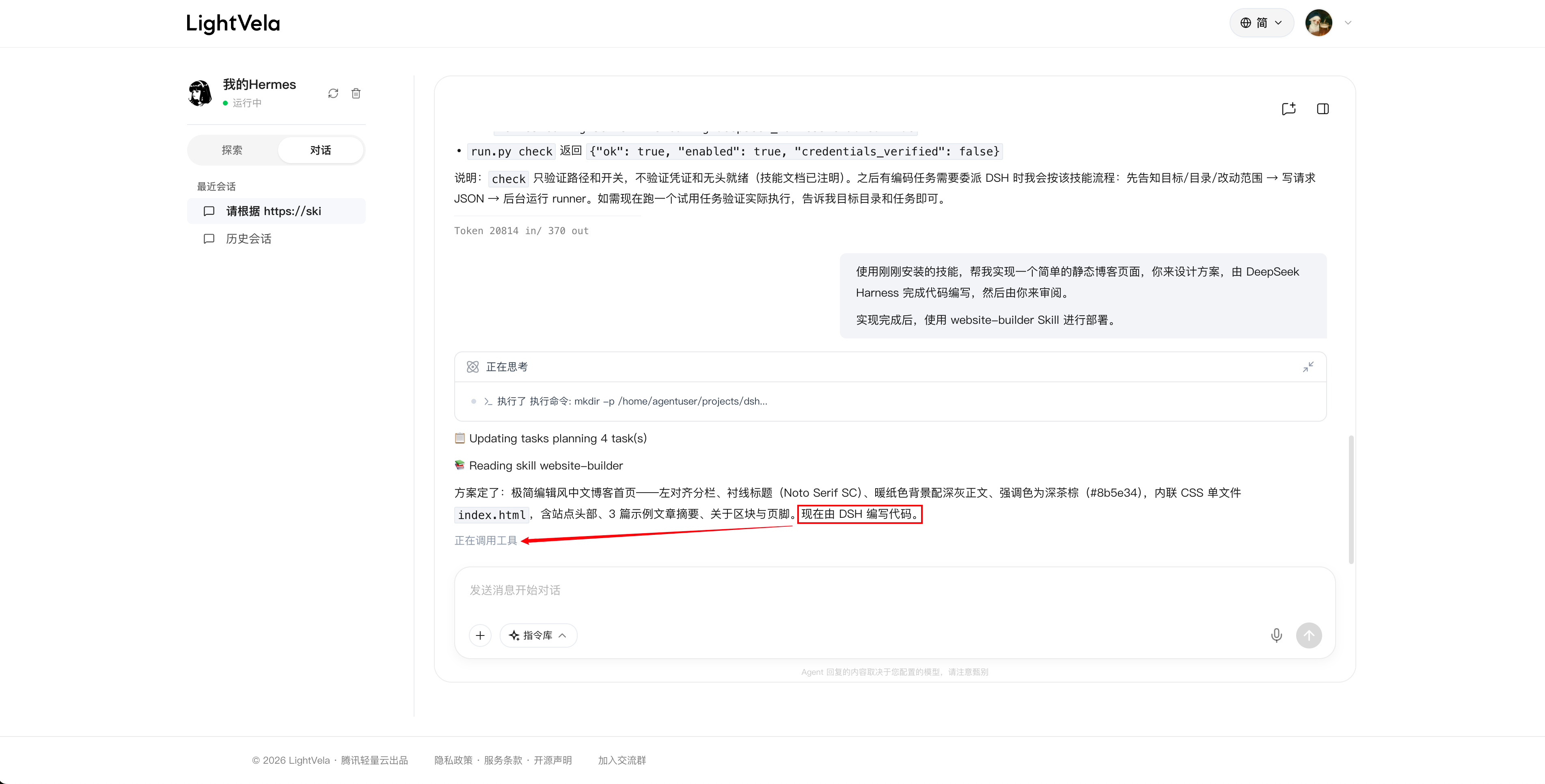
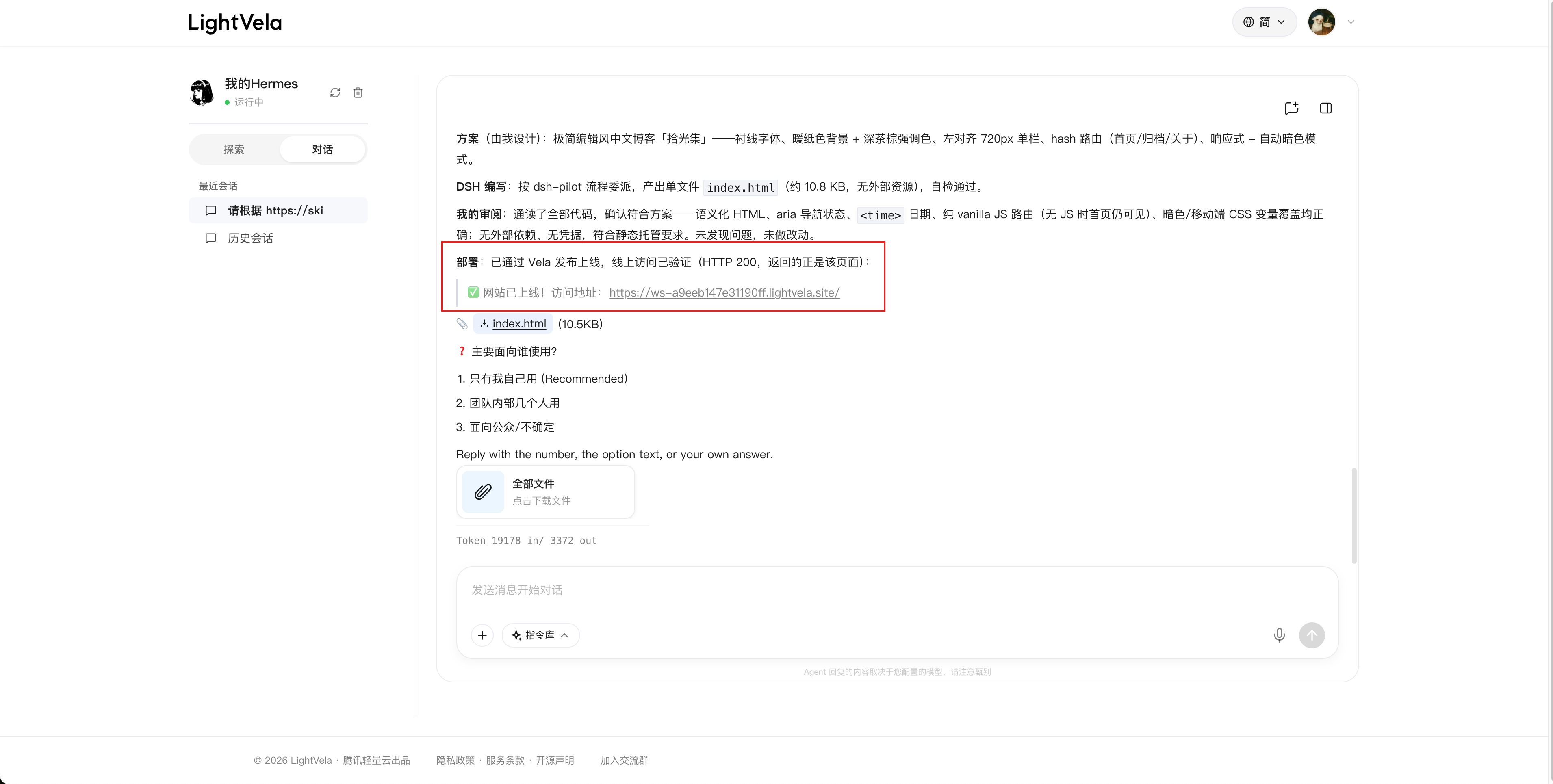
A successfully completed task looks like this:
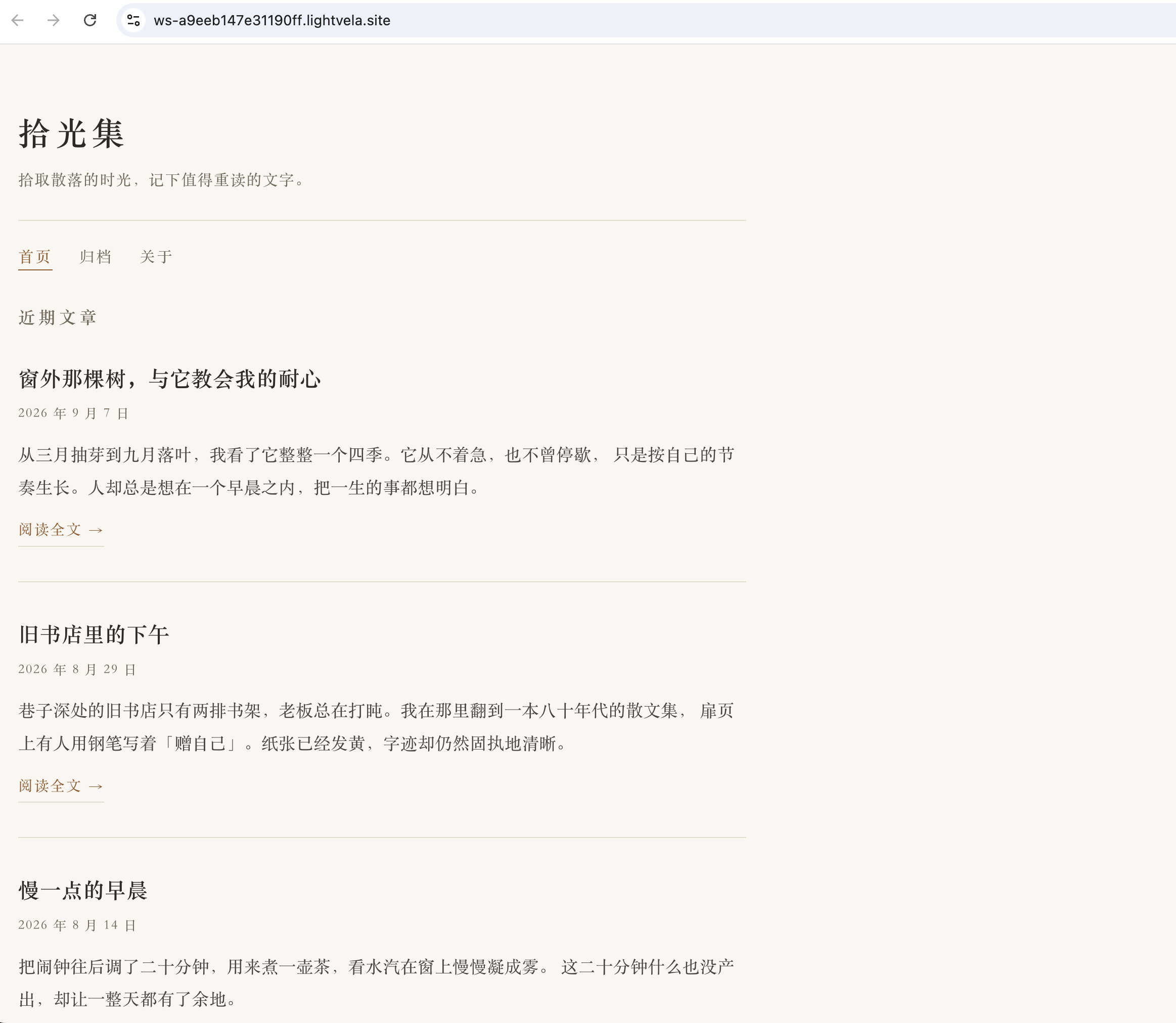
And yes, the site is live, a bit plain, but live:
We'll leave the rest of the scenarios for you to explore. This post is just a starting brick thrown out to attract jade.
Final Words
Adventurers welcome: join the LightVela community group and let's explore what cloud agents can do together.