
Tencent's Cloud Agent Gave an Early Taste of Meta's Muse
On September 8 (local time), Mark Zuckerberg announced Meta Muse on X, a personal agent that can complete tasks for you 24/7. It was a notable pivot: with Meta still chasing a top position in foundation models, Muse is its flanking move into the agent market.
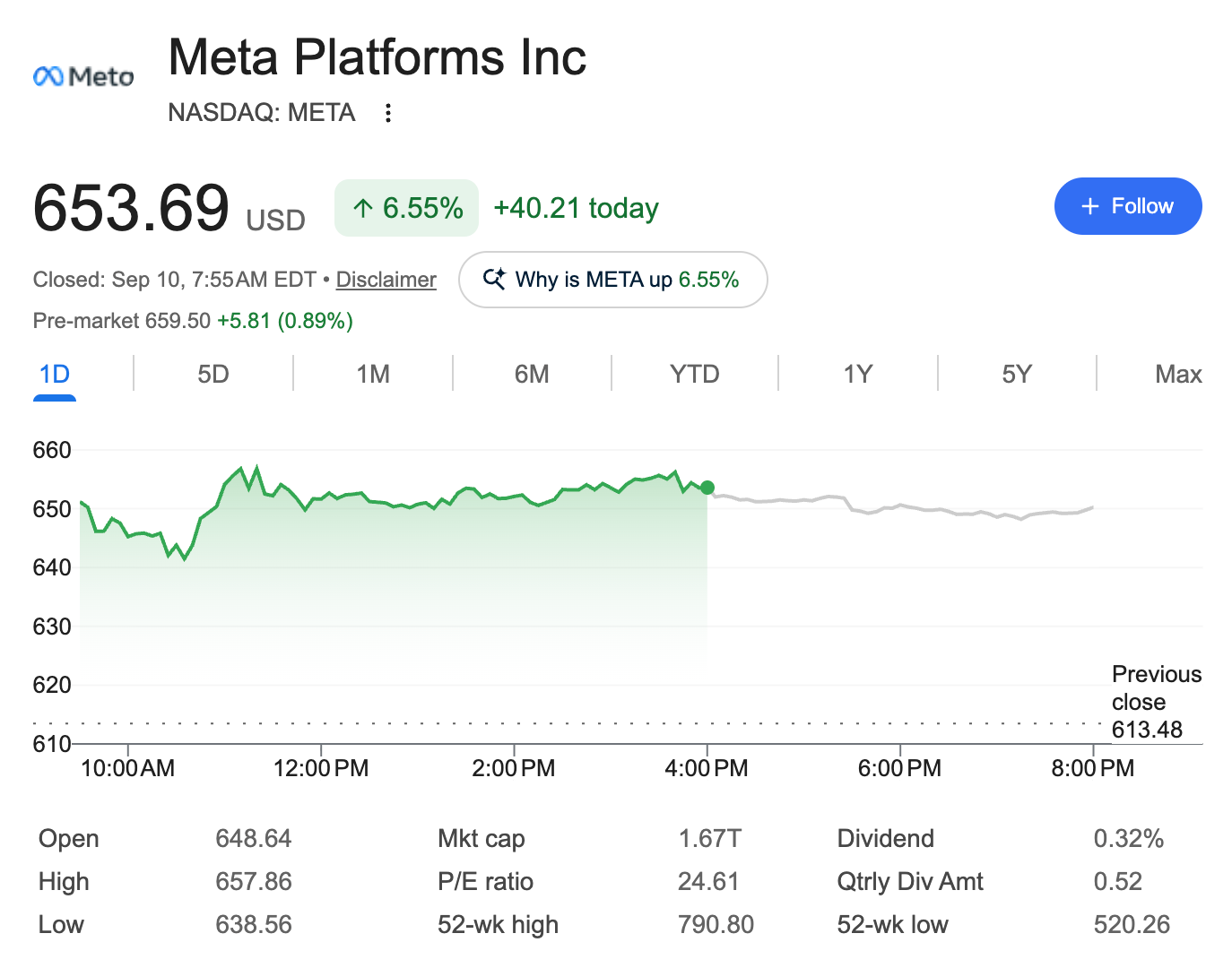
Meta's stock got a nice bump over the following two days, with analysts framing Muse as the start of a new product cycle and a key step toward returns on Meta's AI spending.

But as of this writing, Muse is still behind a waitlist.
A Discovery: Tencent LightVela
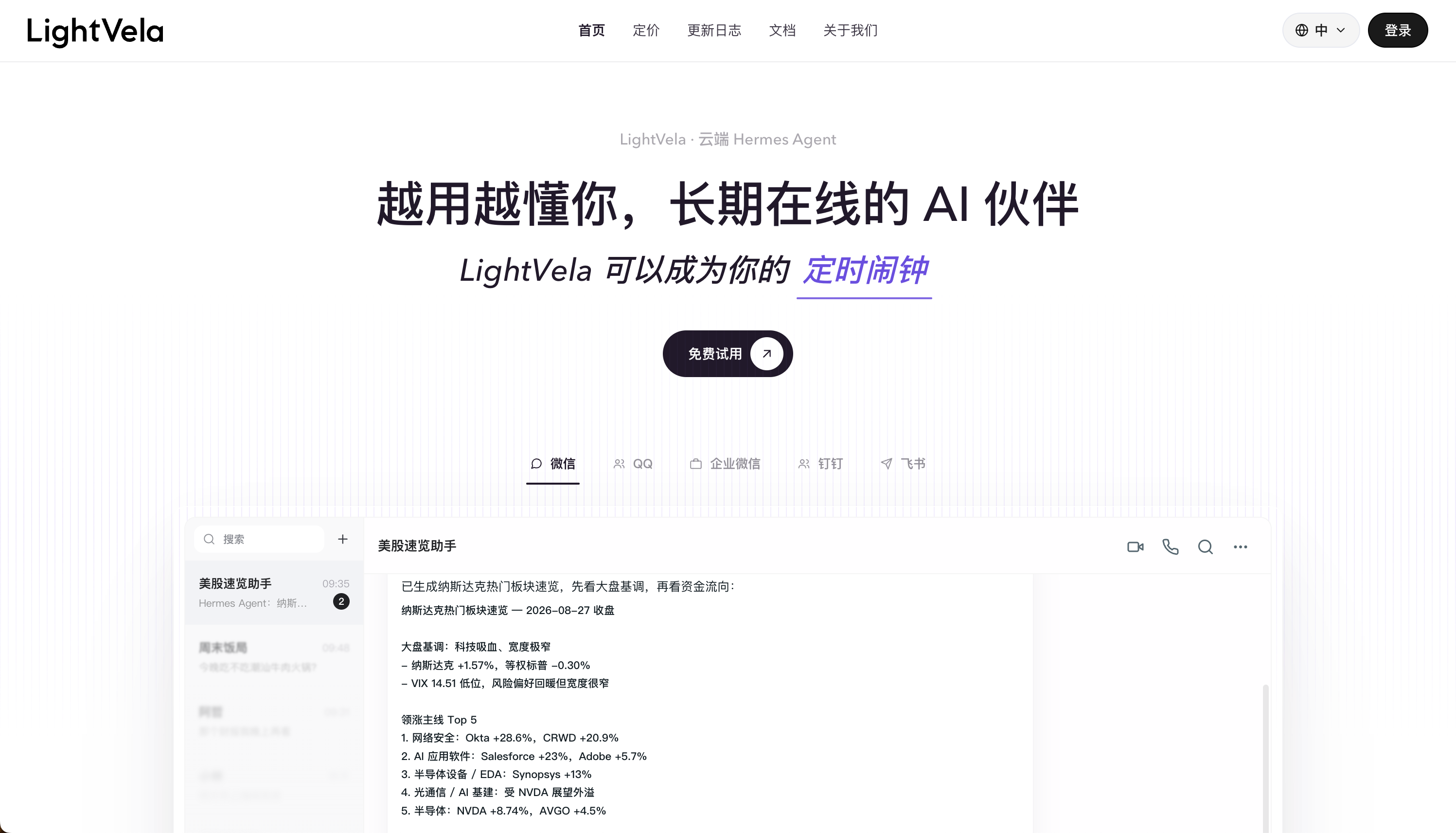
Judging from what's public, Muse works by spinning up an agent in the cloud for each user to get that 24/7 execution. One curious user, let's call him our kind of person, took that exact keyword, "cloud agent," and asked his AI about it. Among the results, the one that caught his eye was Tencent's LightVela, which runs a Hermes Agent in the cloud.
Hermes is an old acquaintance at this point, known for agent self-learning, self-evolution, and memory augmentation, with a community profile that has overtaken OpenClaw. Compared to OpenClaw, Hermes emphasizes autonomous learning and complex task execution: it distills task experience into continuously improving Skills, parallelizes work through sub-agents, and is optimized for always-on cloud operation and token efficiency.
(His words - well, his AI's words.)
Either way, a Hermes Agent under the hood means the fundamentals of the agent experience are in good hands.
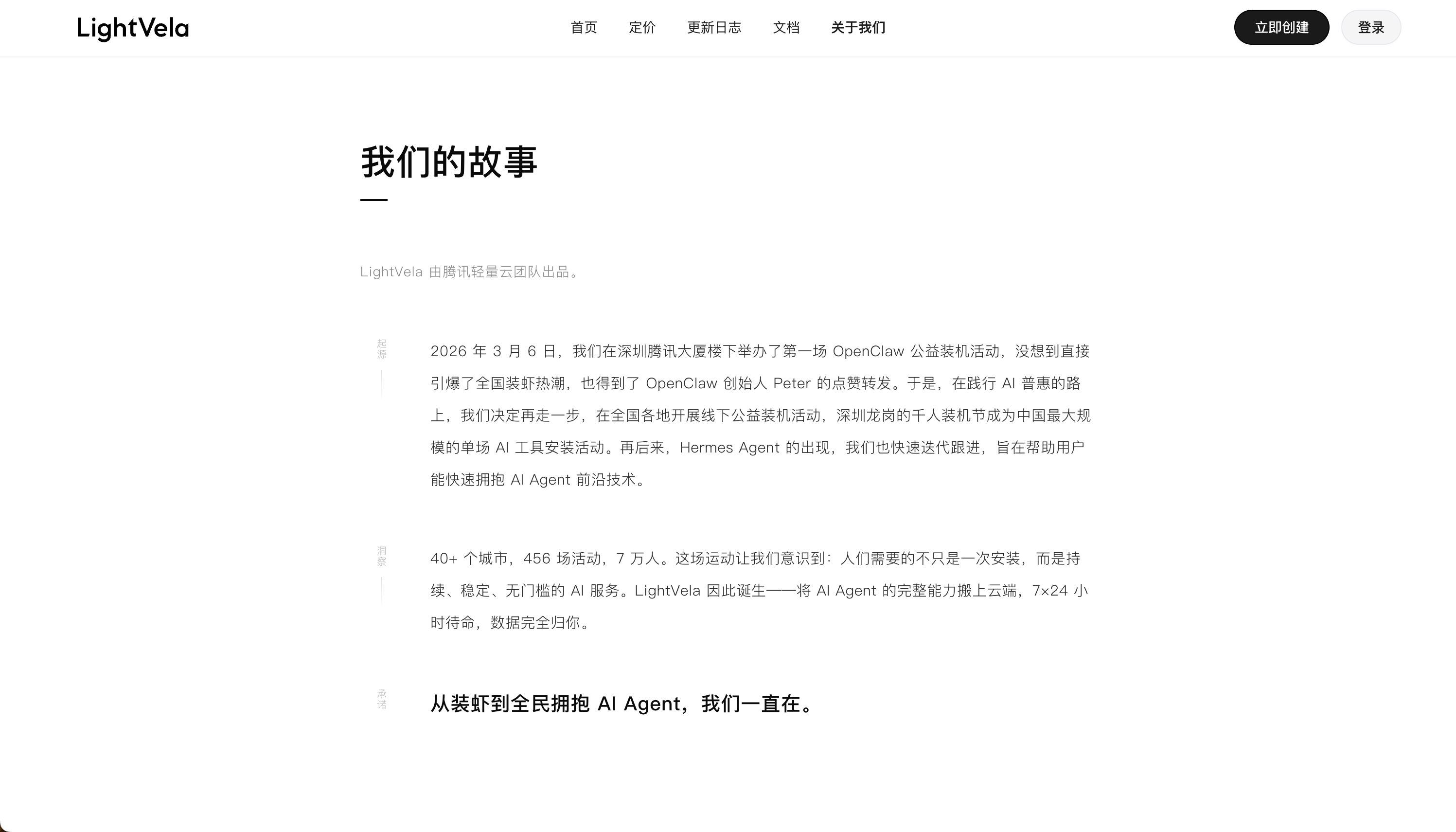
How did he know it was Tencent? The "About Us" page. We're the same team that ran the free OpenClaw installation campaign back in March.
First Hands-On with LightVela
With a free trial on offer, he signed up - why not. Registration is simple (WeChat, QQ, or phone number on the China site), and when he spotted the international site at a different domain - lightvela.ai - he went straight there. If you know, you know.
First contact
Cloud agents usually make you configure models, channels, and Skills yourself, which is a bit of a chore. LightVela turned out to be lighter on setup than expected.
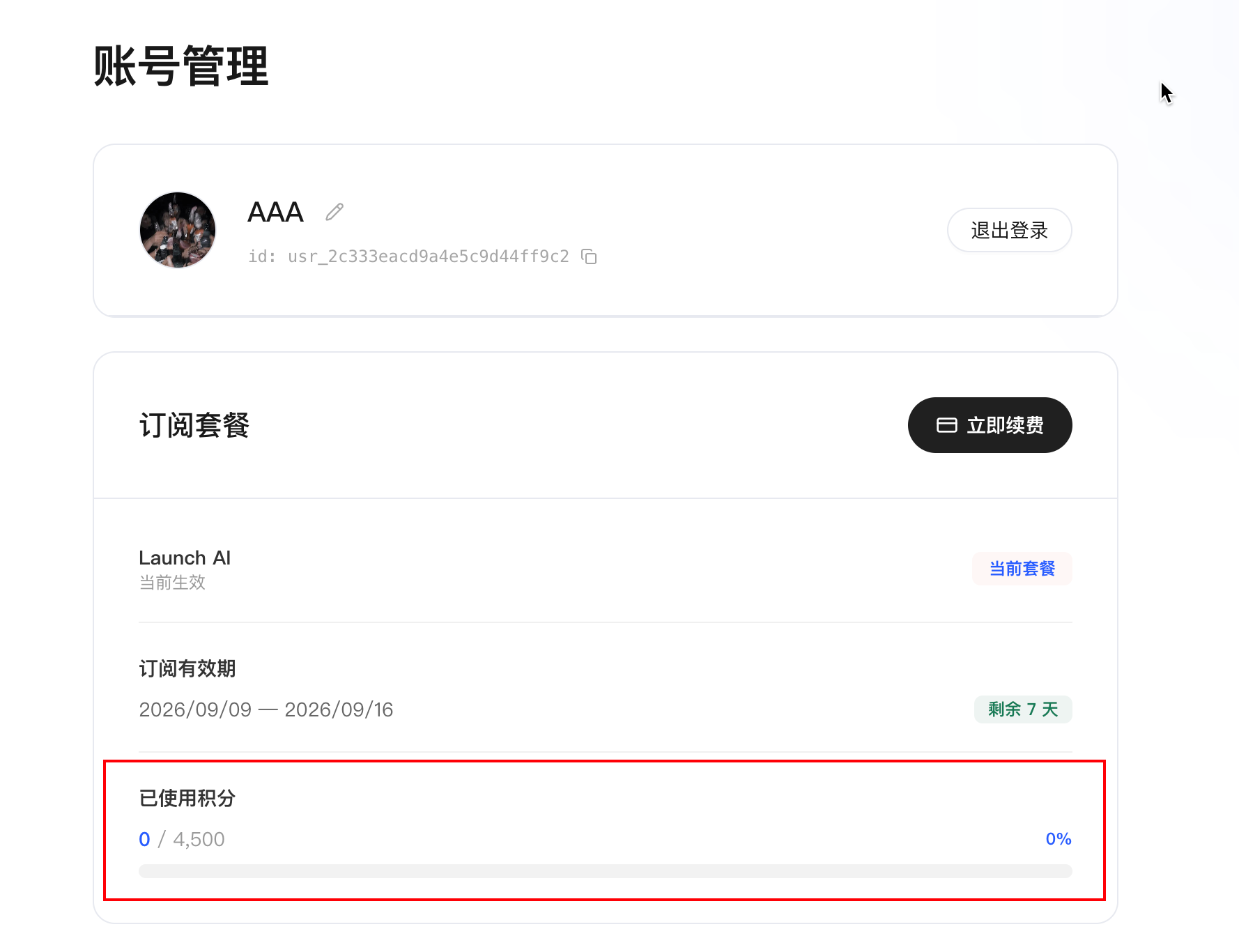
His trial plan came with 4,500 AI credits, so he didn't need to configure a model at all to start.
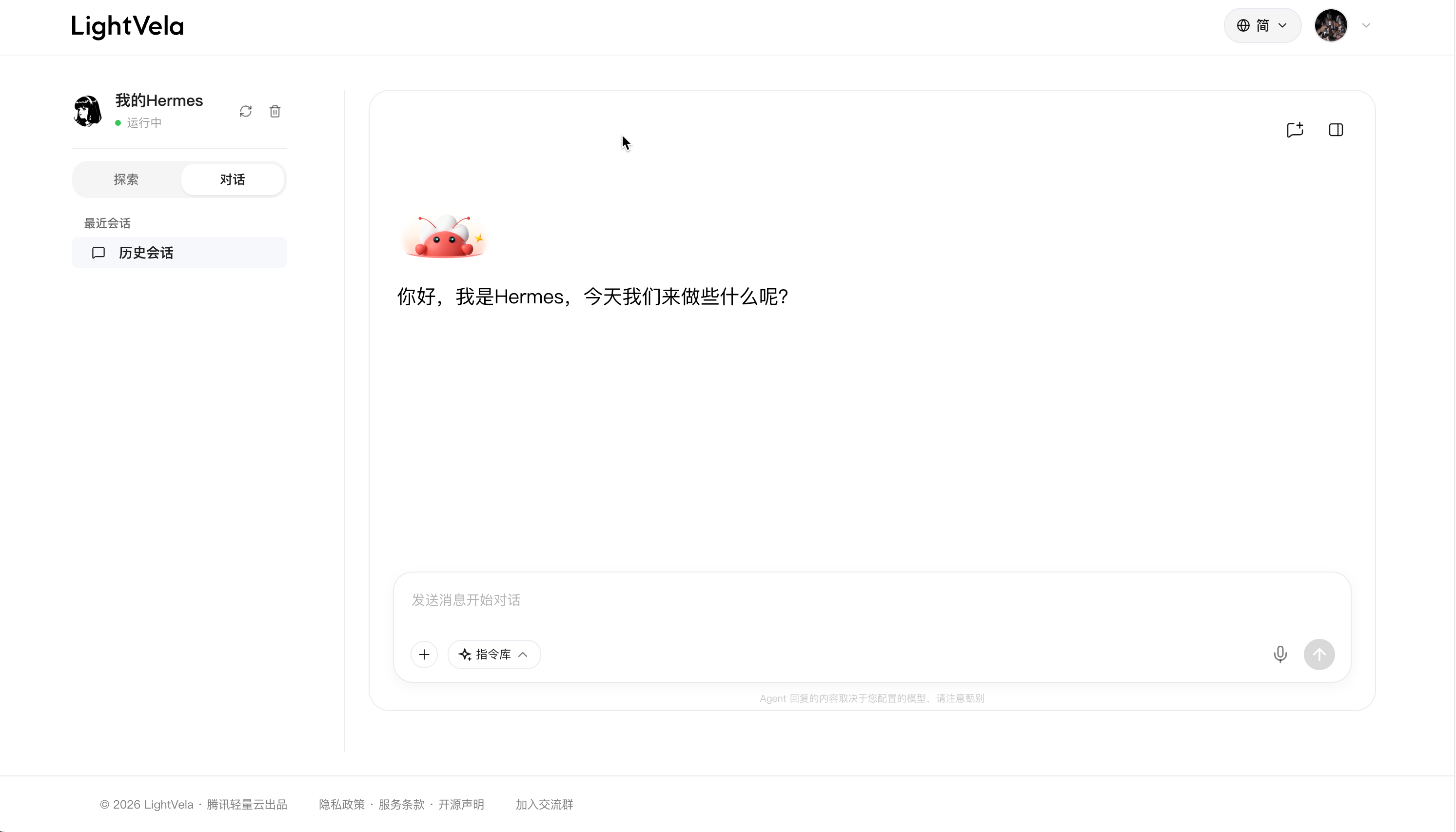
The built-in Chat page handled simple Q&A just fine.
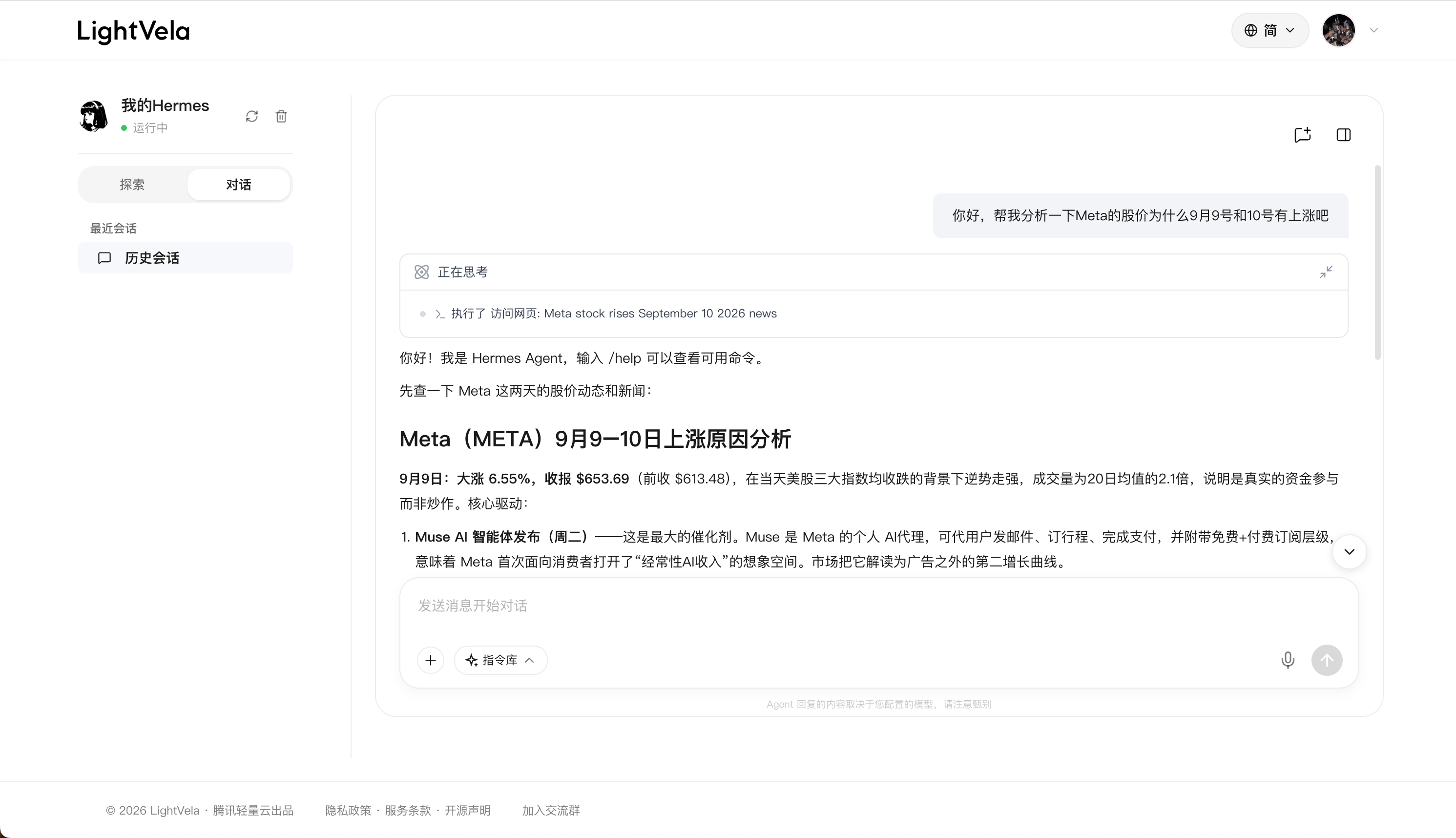
On a whim, he asked the agent to analyze why Meta's stock had been climbing those two days, a simple task. The reply started streaming in under two seconds, and the analysis itself held up.
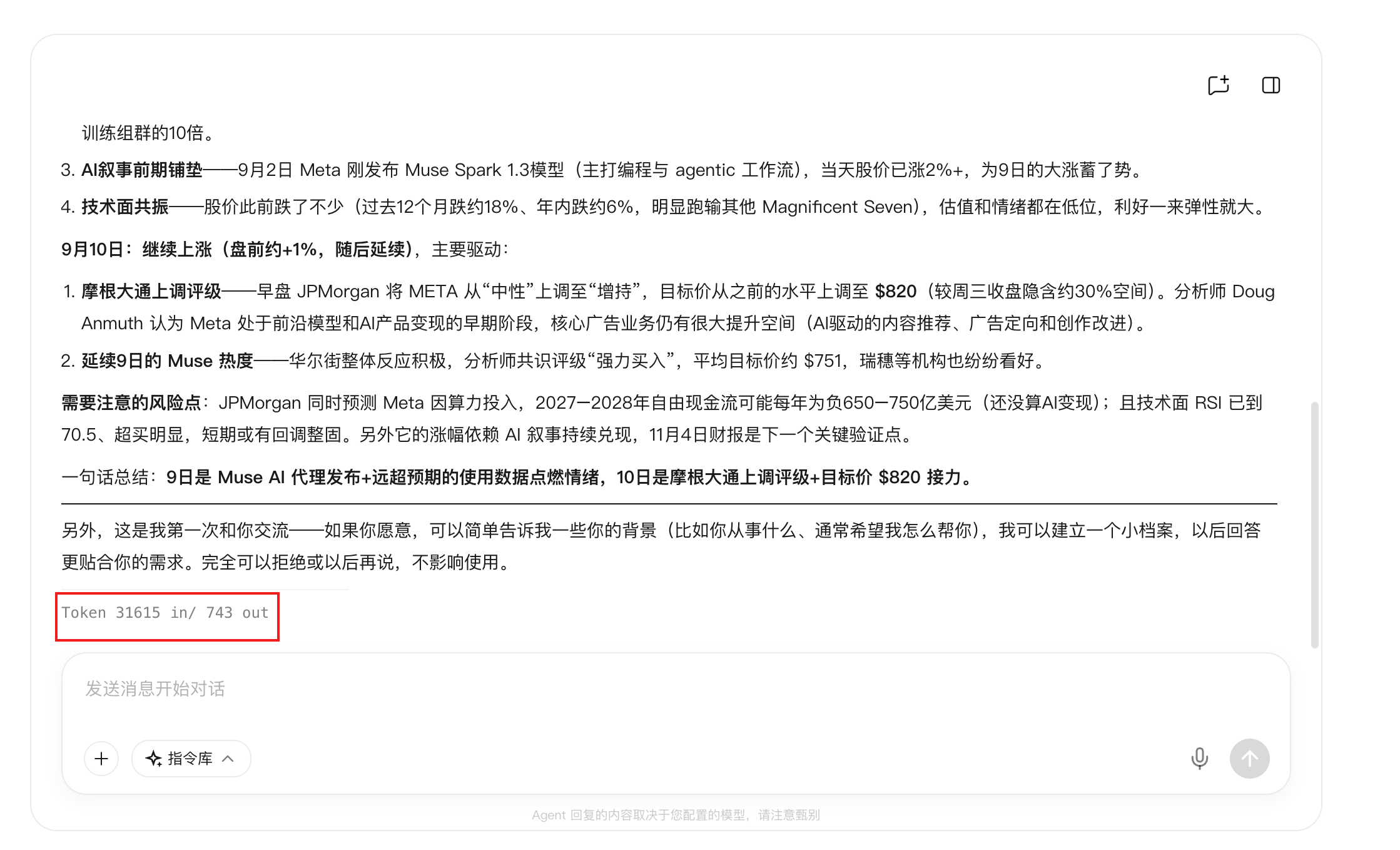
What caught his attention was the token counter at the bottom: this round consumed 31,615 input tokens and 743 output tokens, yet only 1 credit.

Doing the math on simple Q&A alone, his trial credits worked out to roughly 140 million input tokens and 3.3 million output tokens, all usable within the trial period.
His one complaint: the chat page has to reconnect every time you refresh it. Noted, that's on our list.
Scheduled tasks
He'd run plenty of automations locally on Codex before, but they die the moment the laptop closes or the network changes, which is painful for someone who doesn't want to open a computer on weekends. A cloud agent should solve exactly this; we suspect that's the same reasoning behind Meta's pitch.
The LightVela dashboard does have a Scheduled Tasks page with templates, fairly basic ones, admittedly.
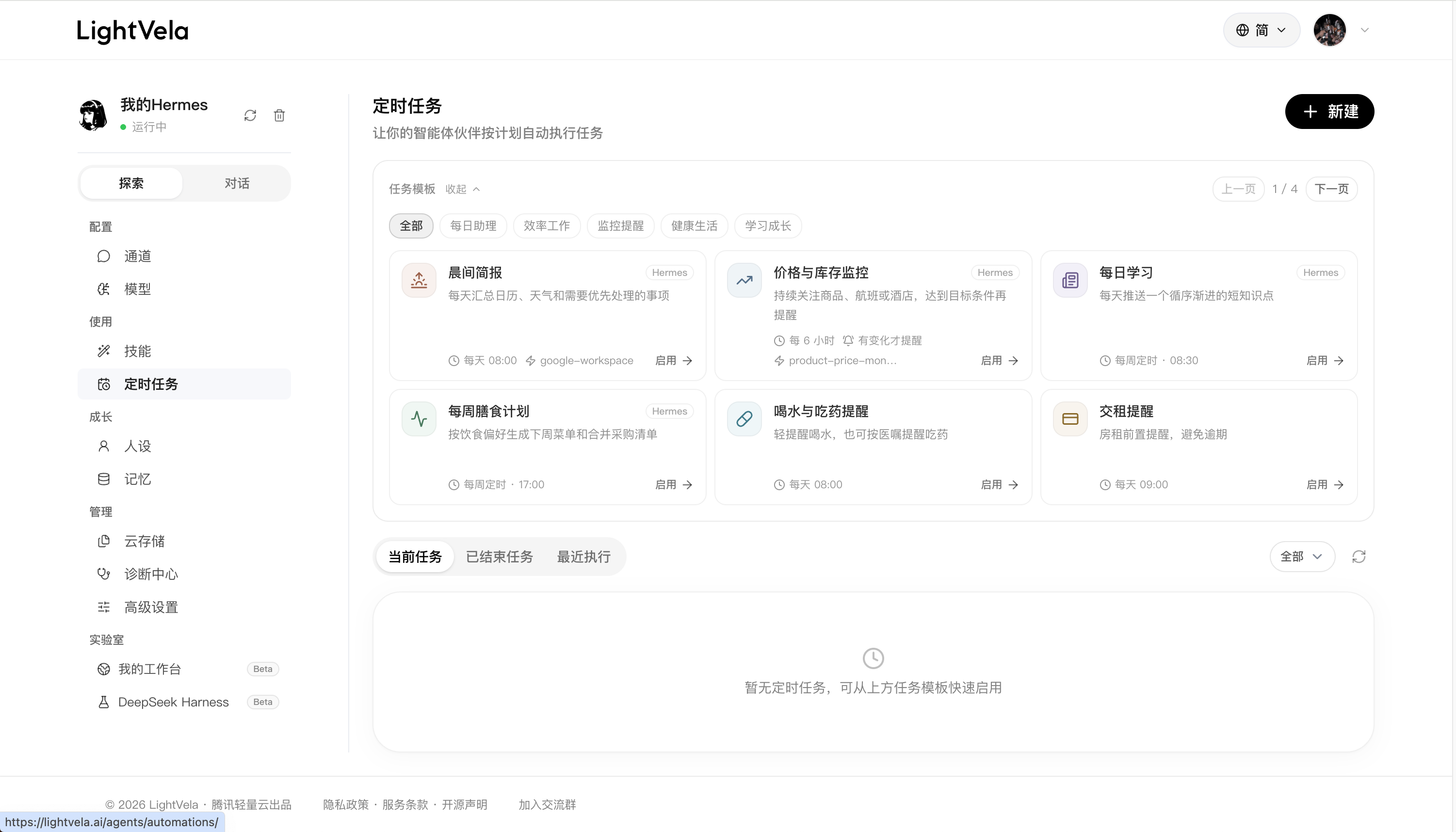
So he set up a monitor for Meta's stock price, partly to see whether Muse really would usher in another glorious run.
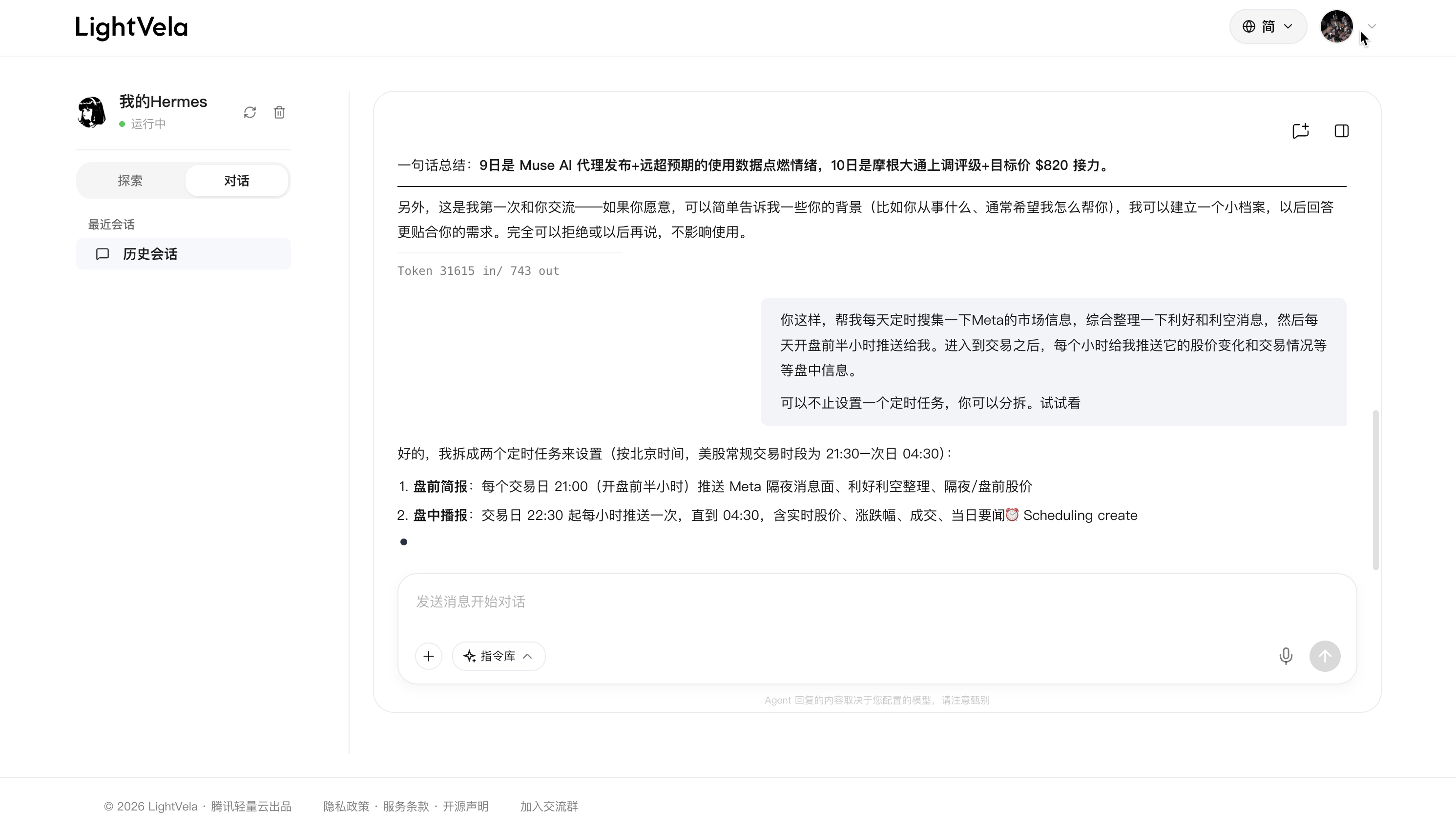
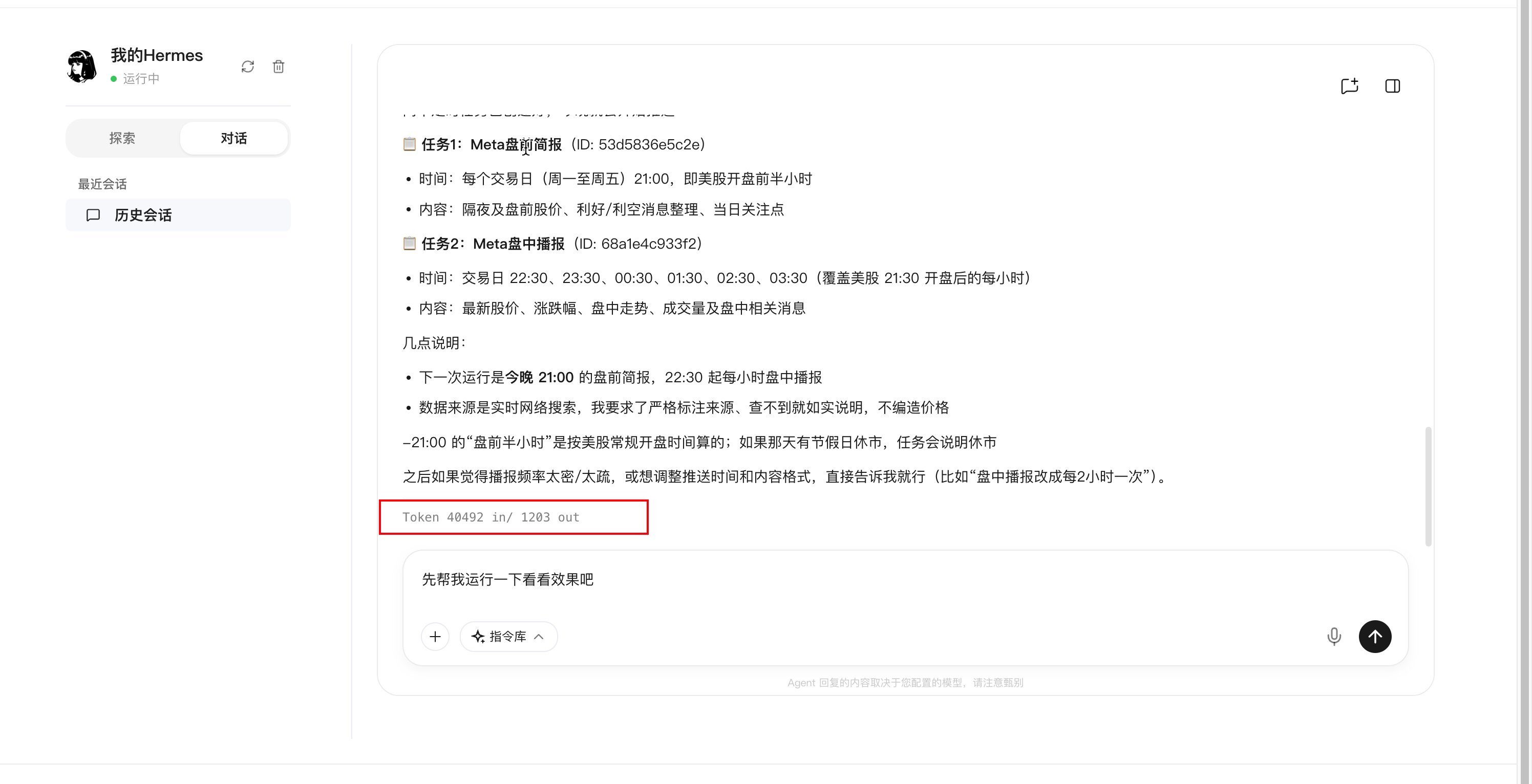
Creating that task cost over 40,000 tokens, but only 2 credits. From a free-trial standpoint, that's remarkably durable.
It was around 8:30 PM and he didn't want to wait for the 10:30 PM schedule, so he triggered a manual run to see the output:
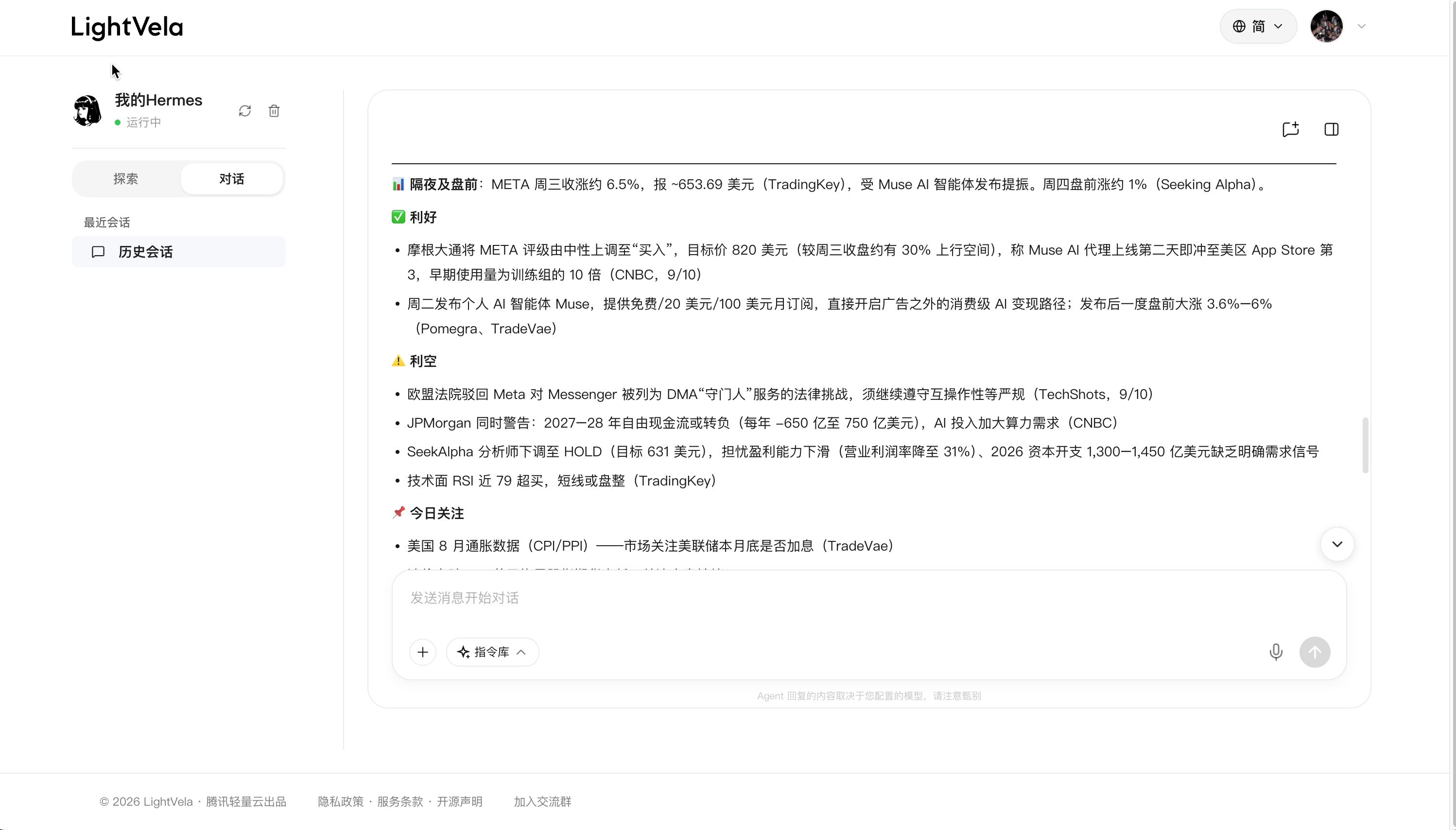
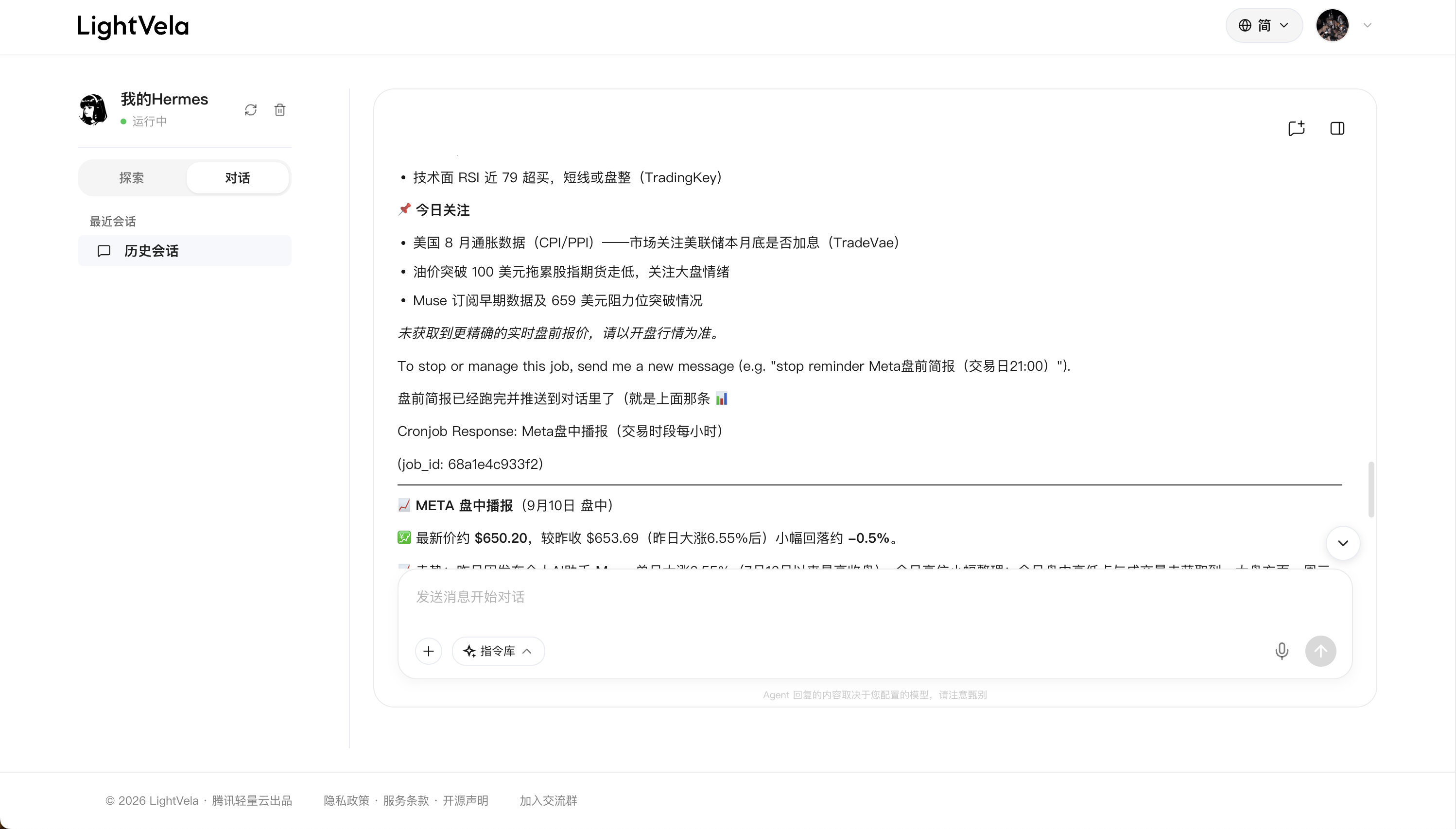
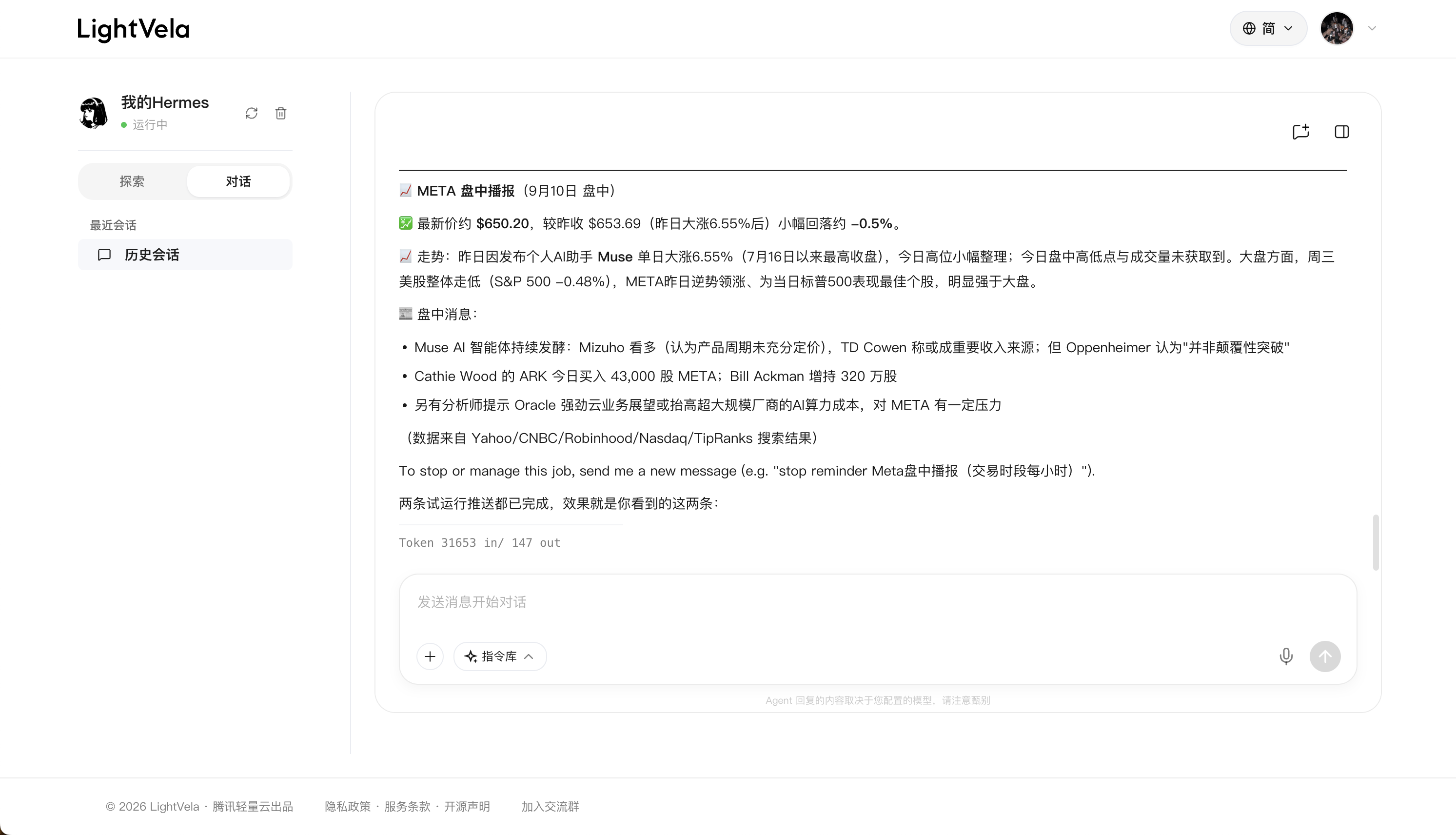
The results met expectations, though he had one gripe: reading them on the web page was a bit of a chore. Better to connect the agent to his WeChat and have results pushed there, with no daily website visits needed.
He'd worried the international site might not support WeChat integration. It does.
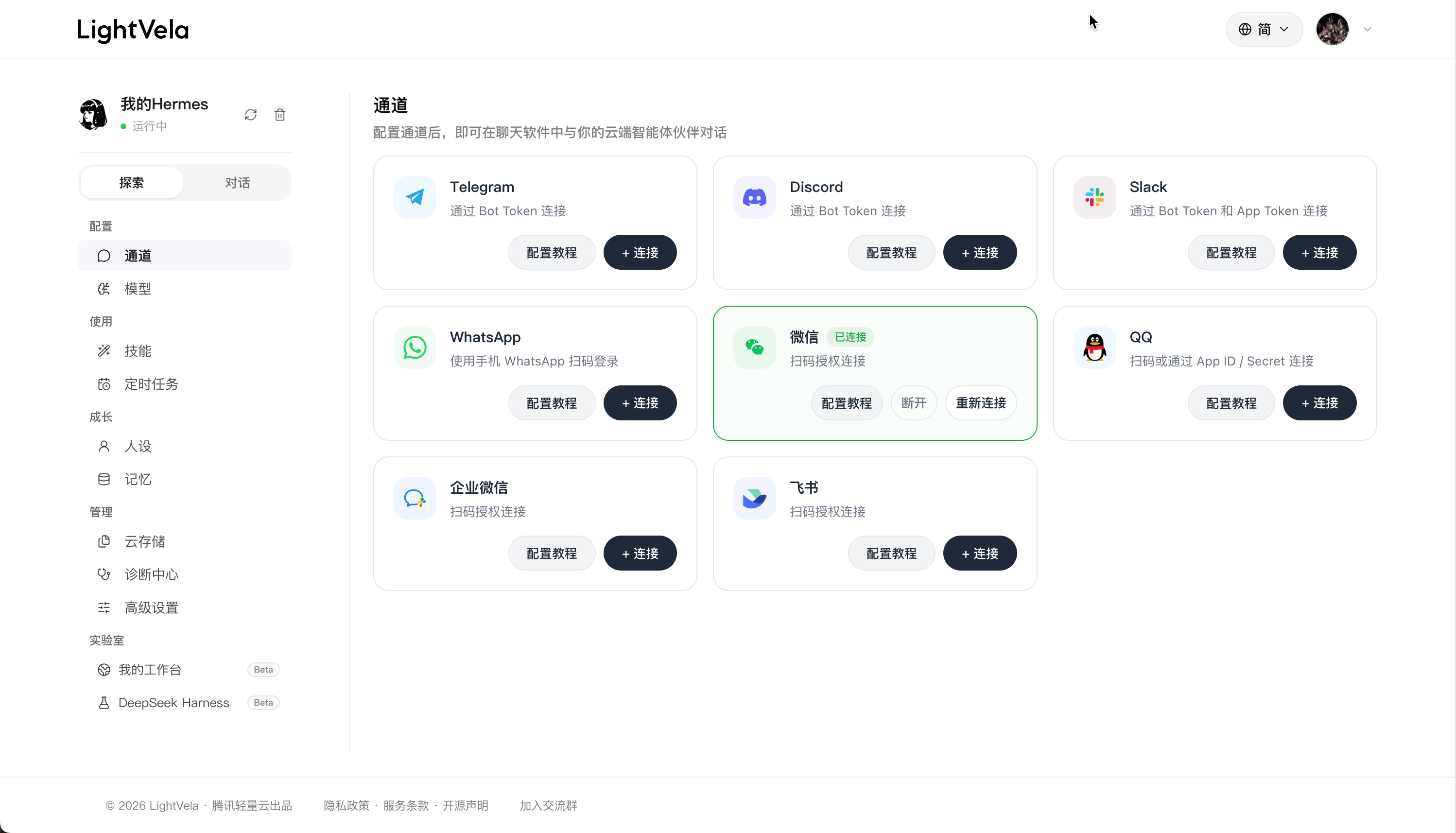
As for how to get task results pushed to WeChat, he just told the agent in WeChat. His first attempt was a 7-second voice message that took nearly a minute to send, and the speech recognition heard "WeChat" (微信) as "satellite" (卫星). We'll take the note on that one too.
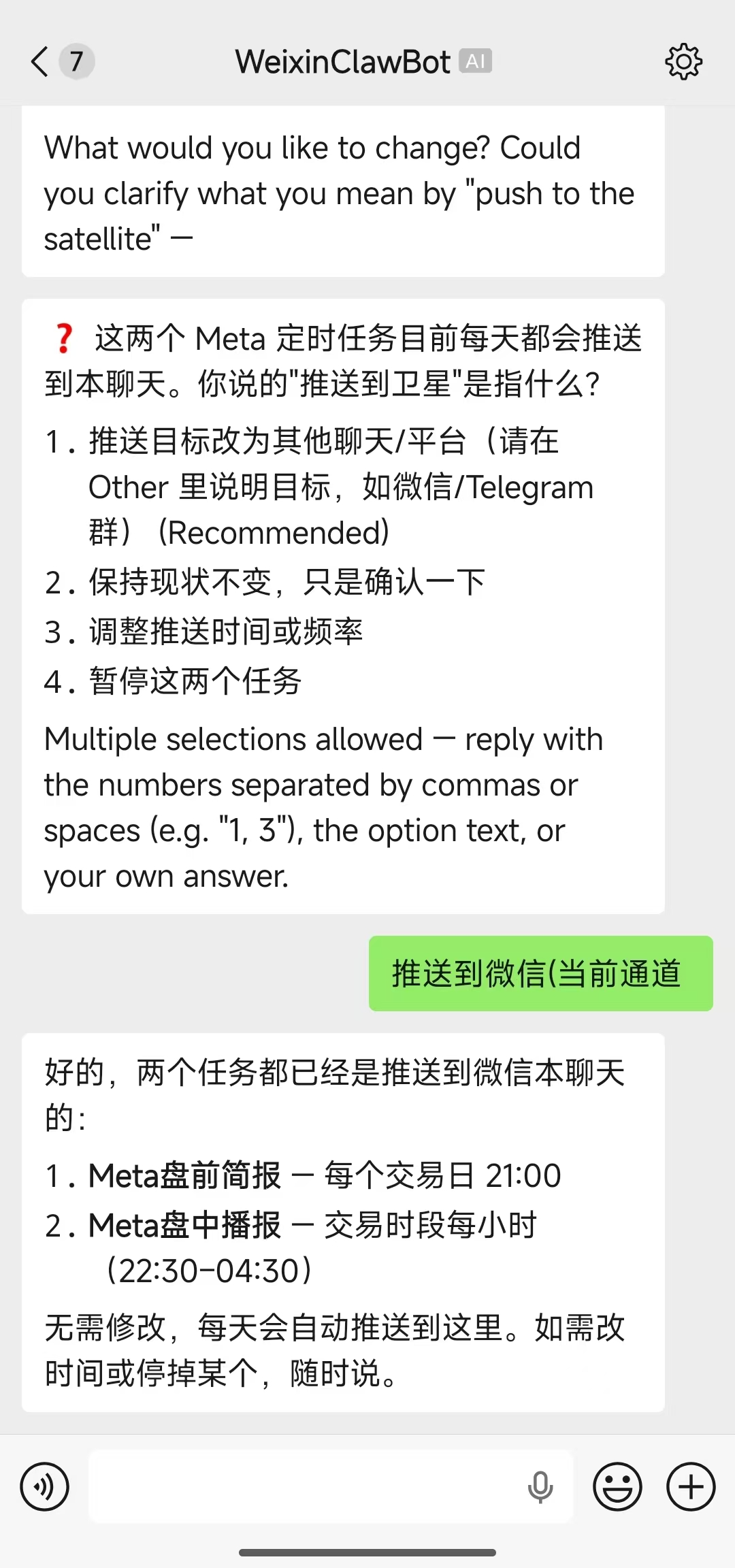
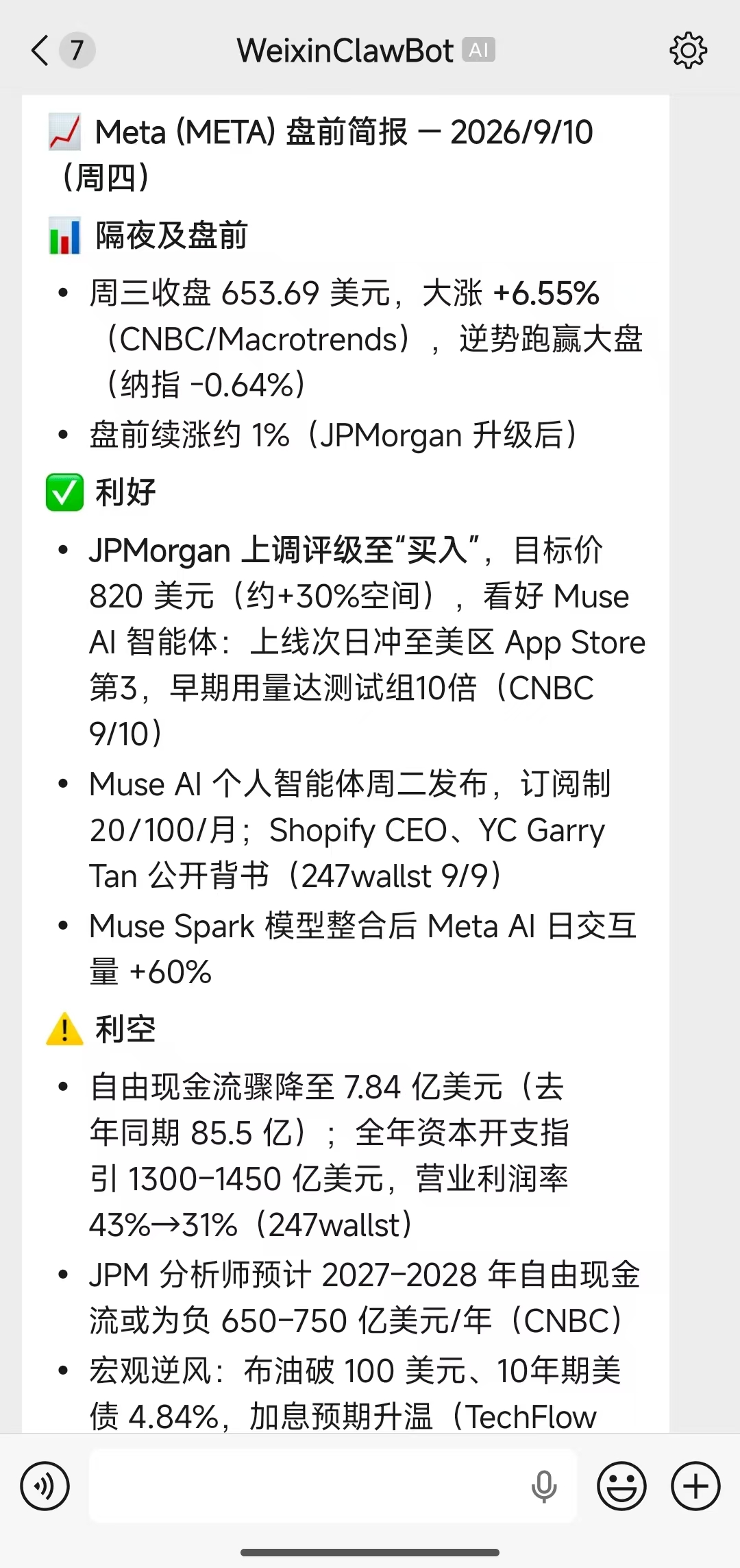
The final setup worked well, and the whole exercise cost him under 10 credits, enough runway to push it hard for days. He also spotted the Workbench and DeepSeek Harness in the dashboard and plans to play with those next.
His closing recommendation after the full run-through: worth a try.
China site: https://lightvela.com
International site: https://lightvela.ai